Outbreak: A Proximity-Aware Zombie Tag Network
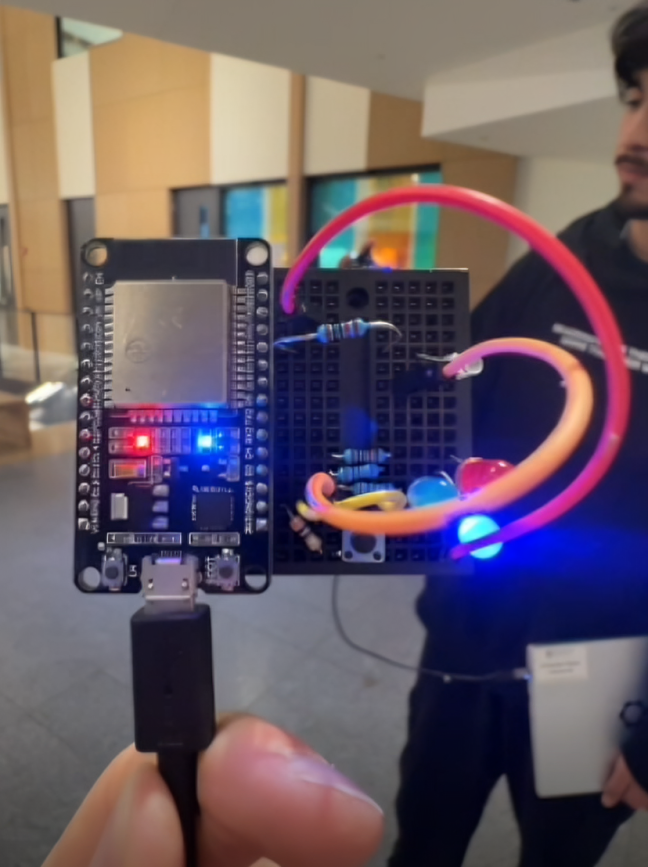
I was responsible for:
Implementing core game logic in C, including player state machines and transition rules
Designing RSSI-based proximity detection, accounting for noise, attenuation, and variability
Developing networking logic for periodic broadcast, message parsing, and state updates
A real-time, distributed multiplayer game built on embedded devices, using wireless signal strength and broadcast communication to enable proximity-based gameplay without centralized coordination.
Overview:
Zombie Tag is a real-time multiplayer game implemented on networked embedded devices, where players dynamically transition between “human” and “zombie” states based on physical proximity.
Unlike traditional networked games that rely on servers or precise location data, Zombie Tag uses wireless signal strength (RSSI) and peer-to-peer communication to infer player interactions. The result is a fast-paced, decentralized system that must operate under noisy measurements, packet loss, and tight timing constraints.
System Architecture:
Embedded Nodes (Players) – Each device represents a player running identical FW
Wireless Broadcast Communication – Devices periodically exchange state messages
RSSI-Based Proximity Estimation – Signal strength is used to infer nearby players
Game Logic State Machine – Determines infection, immunity, and role transitions
Real-Time Feedback – LEDs and timing cues communicate game state to players
Demo Video: